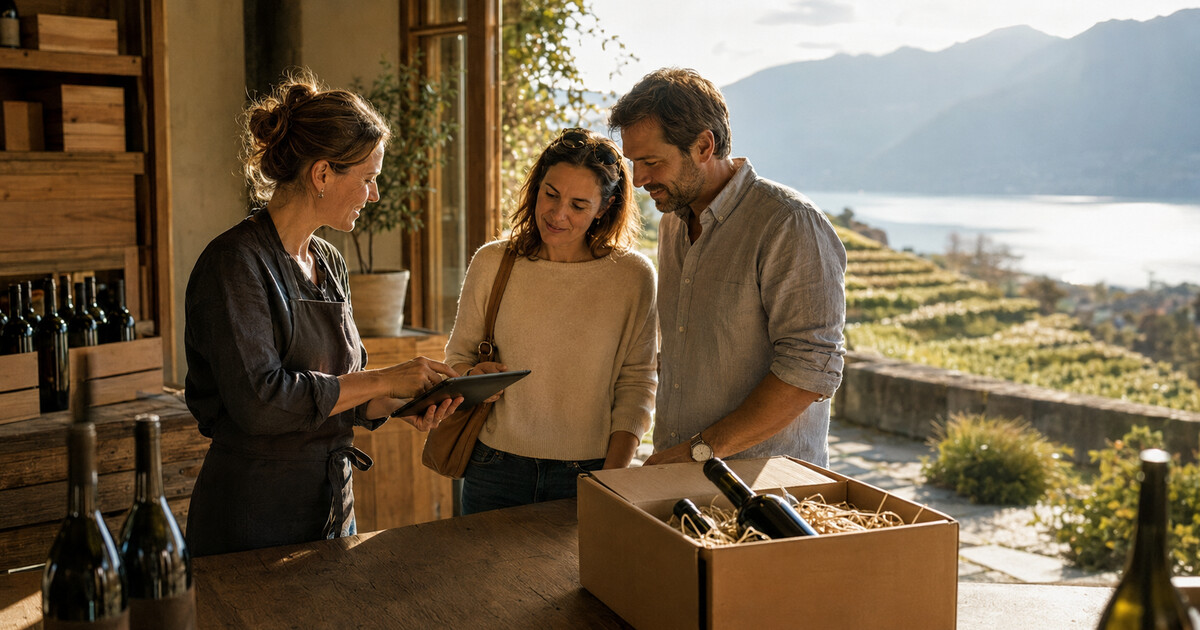
With wine consumption falling and margins under pressure, direct sales and wine tourism become decisive channels for Ticino wineries. Automating the customer relationship — from cellar-door contacts to multilingual communications — lets you sell more without adding staff.
Context: in 2026 the wine market shows falling consumption, high stocks and shrinking profitability; Ticino Merlot too faces rising costs (sources: Forbes Italia, RSI, Ticinowine).
When the market tightens, the direct customer is worth more
When consumption falls and margins thin out, every bottle sold directly — at the cellar, online, at an event — is worth far more than one passed wholesale. The direct channel holds the margin and builds a relationship that brings the customer back. The problem is the time to cultivate it.
Ticino viticulture has bet on quality, but quality in the bottle isn't enough if the customer who bought a case in September doesn't hear from you again until the following year. The relationship must be kept alive, and doing it by hand, between vineyard and cellar, is nearly impossible.
This is where automating customer communication becomes a concrete sales lever, not a luxury for big producers.
The customer relationship that cultivates itself
An automation can manage the winery's customer list and send the right communications at the right time: the thank-you after a purchase, the new-vintage announcement, the tasting invitation, the holiday offer. All in the winery's tone, without anyone writing each message by hand.
In practice: whoever buys or visits enters a tidy list; from there go communications designed to bring them back to buy, with wine sheets, tasting notes and links to reorder. The customer feels looked after, the winery sells more to the audience it has already won.
The same product sheets and communications can be produced in several languages — useful for tourists and cross-border customers — so wine tourism becomes a sales channel that continues after the visit.
Wine tourism and enquiries: no contact lost
Tasting bookings, group requests, questions about wines and opening hours: a digital assistant can reply at once, gather the details and organise the requests, even when you're among the vines. Every contact is followed up, instead of sitting in an inbox until evening.
The result is twofold: the visitor gets fast, professional service, and the winery turns more enquiries into visits, and more visits into repeat sales. It's the same tools already in use — email, messages, a spreadsheet — finally used well.
Want to know where to start? In a free 60-minute audit we look at how you handle customers and enquiries today and choose the first useful automation. You'll find the plans with clear prices on the site.
A communication cycle that brings the customer back
Picture a customer who buys a case of Merlot in September after a tasting. Today, most likely, you won't hear from them again until the next year — if they come back. With a simple communication cycle, instead, they get a thank-you with tasting notes, in November the holiday offer, in spring the invitation to the new-vintage launch.
Each message has the winery's tone and a link to reorder in two clicks. It's not aggressive advertising: it's staying present in the mind of someone who already chose you. On the same audience you've already won, that means extra bottles without spending a franc on acquisition.
And if your customers include German or French-speaking Swiss tourists, the same communications go out in their language, with no extra work for you.
We tidy your contacts and build the right cycle starting from a free audit. The plans are on the site, jargon-free.
An often-overlooked advantage is customer knowledge. By keeping contacts and sales in order, the winery learns who buys what, who comes back and who has drifted away. It's the basis for proposing the right thing to the right person, instead of generic communications that are the same for everyone.
In a market where consumption falls and competition rises, this direct relationship is one of the few advantages no competitor can copy: it's the bond between your winery and those who already loved your wines. Cultivating it is the most solid strategy there is.
How you start with Dedalix
We begin by tidying the contacts you already have — sales, visits, events, tastings — and defining a few key communications in the winery's tone. We test them, see how customers respond and from there build the cycle that brings people back to buy.
You need no marketing structure or technical skills: we handle the AI, you keep making the wine. And you decide the frequency and tone of communications, because the relationship with your customers stays yours.
Frequently asked questions
I don't have a tidy customer list: is that a problem?
No, it's the starting point. Part of the work is putting the contacts you already have in order — sales, visits, events — so you can reach out usefully and respectfully.
Won't the communications feel like spam?
No, if they're few, relevant and in the winery's tone. The goal is to stay in touch with those who already chose you, not to bombard: quality and frequency are up to you.
Can I communicate in several languages?
Yes. Wine sheets, invitations and replies can be produced in Italian, German, French or English, useful for tourists and foreign customers.
Is it worth it for a small winery?
Often especially for small ones: where the owner handles vineyard, cellar and sales, automating the customer relationship frees the time needed to sell more without hiring.